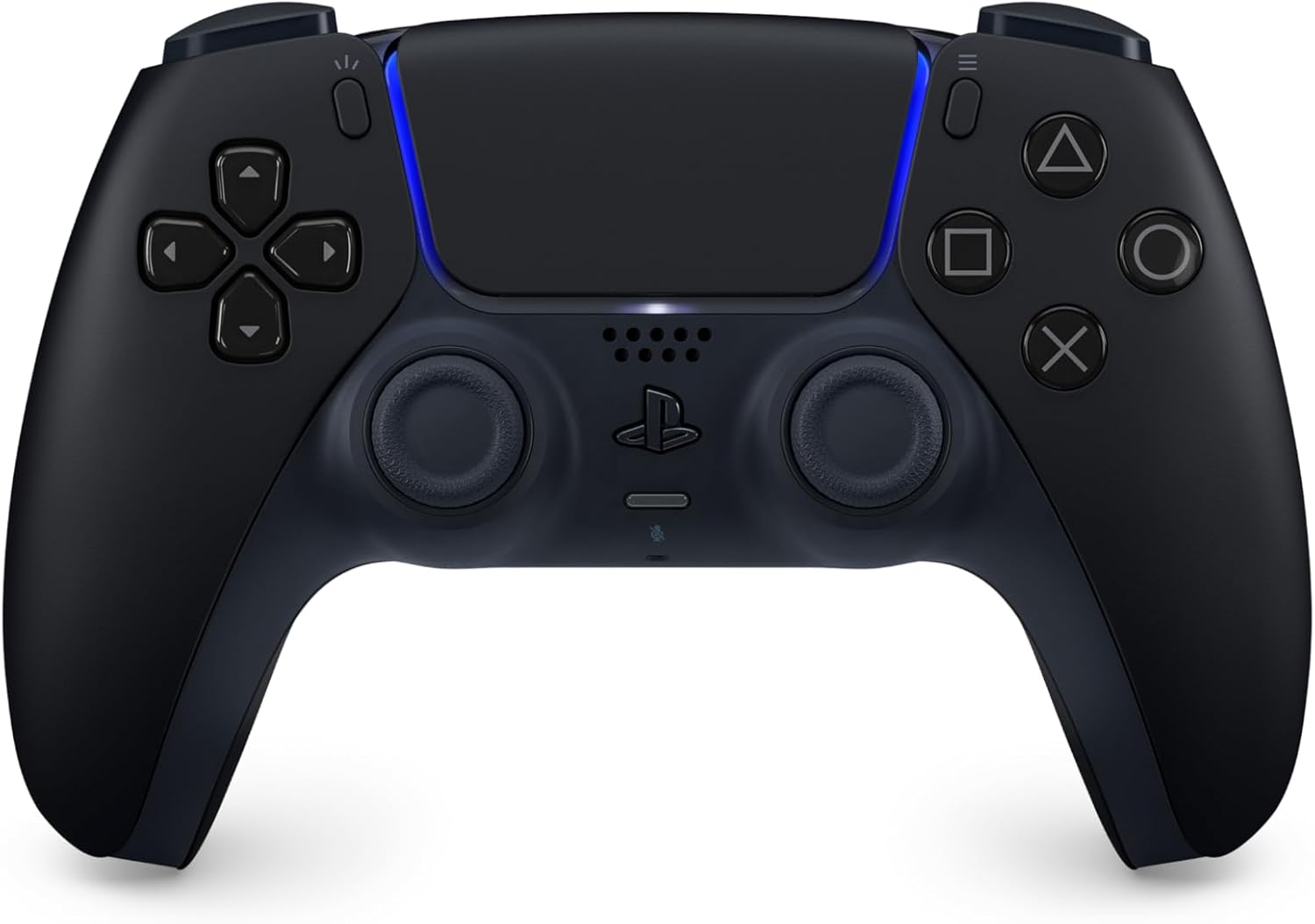
Not RGB theater. Feedback you can feel in a boss fight.
Who this is really for
You bought a PS5 for the games, not for a plastic rectangle that could have shipped in 2015. DualSense is for players who notice when a trigger gets heavier right before a shot, or when a footstep lands in the left palm instead of a generic rumble spam.
If your cave is a couch, a TV, and a stack of first-party titles, this is the default pad—not a fashion accessory.
What it does better
Haptics and adaptive triggers are the headline for a reason. When a studio builds for them, the pad stops being a dumb input brick and starts selling material—mud, string tension, engine vibration. Share tools and the Create button keep capture friction low for people who clip as they play.
Comfort is the quiet win. Long sessions do not feel like a claw test for most hands, which is the bar that matters more than a marketing slide.
Living with it
Charge it with the same USB-C habit you already have for everything else. Keep a second pad if you co-op or hate mid-raid battery anxiety. On PC, expect more setup than an Xbox pad; on PS5, it just works.
Stick wear is real over years of ranked seasons. That is not a DualSense-only story—it is every modern stick module. Budget for a spare if you play like a second job.
Trade-offs we checked
We weighed DualSense against Xbox Wireless for PC versatility and against Edge for pro-layout modularity. Stock DualSense wins for pure PS5 immersion per dollar. Edge wins when paddles and stick swaps are non-negotiable. Xbox still wins pure multi-platform muscle memory. Buy the pad that matches the screen you actually sit in front of.